
Root Canal Treatment in Lucknow: Procedure, Cost & Recovery
Understand the symptoms, treatment process, pain management, dental crowns and recovery after Root Canal Treatment.
Toothache can make everyday activities such as eating, drinking and sleeping uncomfortable. If the pain is accompanied by prolonged sensitivity, swelling or discomfort while chewing, it may indicate a problem inside the tooth that needs dental evaluation.
One treatment used to manage infection or damage inside a tooth is Root Canal Treatment (RCT). It aims to remove the affected pulp tissue, clean the root canals and preserve the natural tooth whenever possible.
If you are looking for information about Root Canal Treatment in Lucknow, this guide explains how the procedure works, when it may be needed, what recovery involves and why a final dental restoration is important.
At TrueMax Dental Clinic, Kalyanpur, Lucknow, patients can consult the dental team for an examination and an individual treatment plan based on their dental condition.
What Is Root Canal Treatment?
Root Canal Treatment is a dental procedure used when the soft tissue inside a tooth, known as the pulp, becomes inflamed, infected or irreversibly damaged.
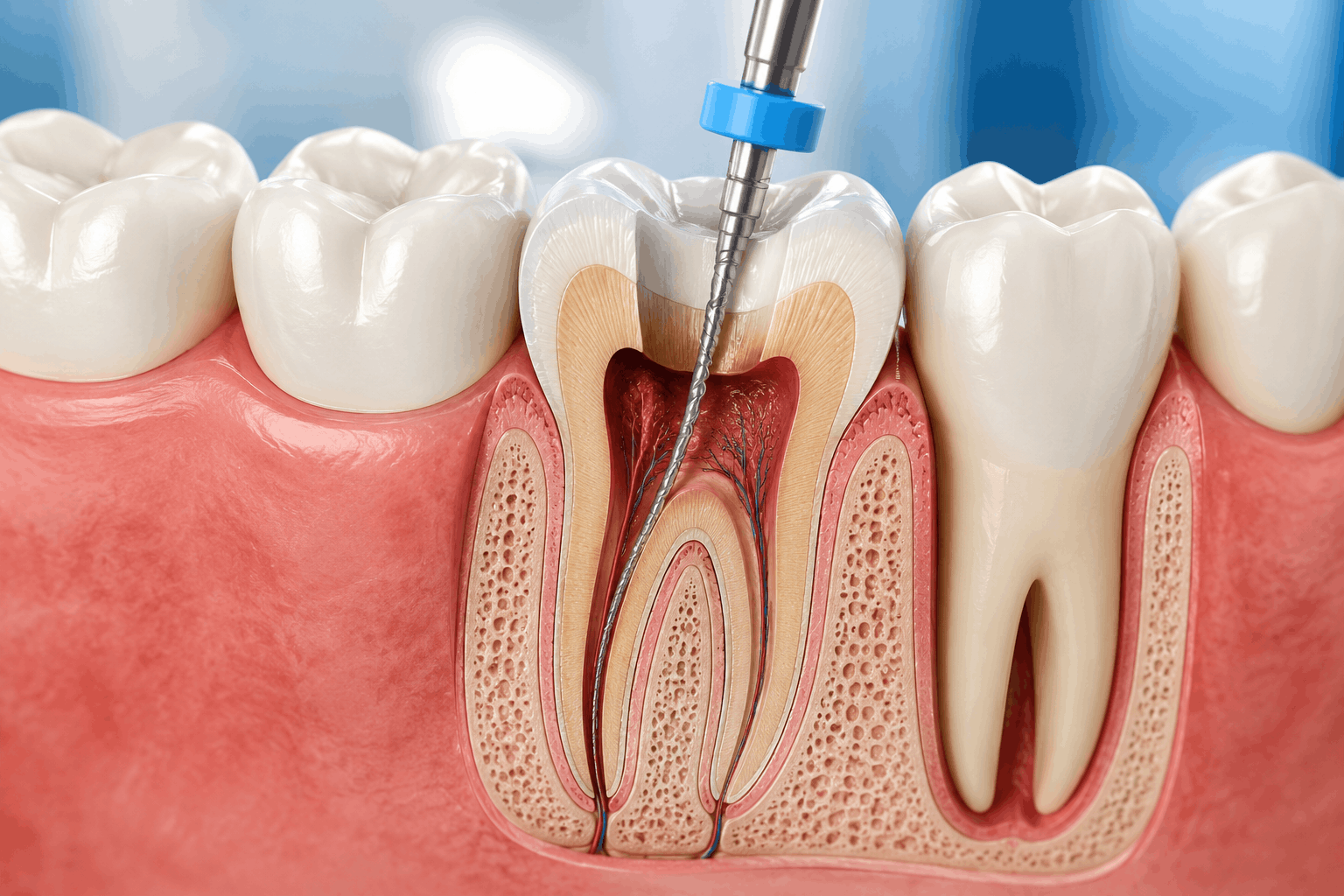
The pulp contains nerves and blood vessels. It is located inside the pulp chamber and extends into narrow channels called root canals. Deep tooth decay, cracks, repeated dental procedures or an injury can damage this tissue.
During RCT, the affected pulp is removed. The inside of the tooth is cleaned, shaped and disinfected. The root canals are then filled and sealed to help prevent further bacterial entry.
Important: Root Canal Treatment does not replace the entire tooth. It treats the inside of the tooth while retaining the remaining natural tooth structure when the tooth is suitable for restoration.
Symptoms That May Indicate a Need for RCT
Not every toothache requires a root canal. However, certain symptoms may indicate pulp inflammation or infection and should be evaluated by a dentist.
1. Persistent Toothache
Continuous, throbbing or spontaneous tooth pain may be associated with inflammation or infection inside the tooth.
2. Prolonged Sensitivity
Pain that continues after consuming hot or cold food and drinks may indicate a problem involving the dental pulp.
3. Pain While Biting
Discomfort when biting or chewing can occur with dental infection, cracks or other tooth problems.
4. Swelling or Pus
Swelling near a tooth, pus discharge or a recurring gum bump may be associated with an abscess.
5. Tooth Discolouration
A tooth that becomes darker after an injury or over time should be examined for possible pulp damage.
6. Tenderness Around the Gums
Tenderness around a particular tooth may be associated with infection or inflammation in surrounding tissues.
Facial swelling, fever, difficulty swallowing or difficulty breathing requires urgent medical or dental attention. Do not delay care when these symptoms occur.
What Causes Tooth Pulp Infection?
The dental pulp can become infected or irreversibly damaged for several reasons. Common causes include:
- Deep tooth decay: Untreated cavities may allow bacteria to reach the pulp.
- Cracked teeth: A crack can create a pathway for bacteria to enter the inner tooth.
- Dental injury: A blow or accident can damage the pulp, even when the tooth looks intact.
- Repeated dental procedures: Multiple procedures on the same tooth can sometimes affect the pulp.
- Extensive tooth damage: Severe structural damage may expose or compromise the pulp.
A clinical examination and appropriate dental imaging help the dentist determine whether RCT is required or whether another treatment would be more suitable.
How Is Root Canal Treatment Performed?
The exact procedure depends on the tooth and the complexity of the case. A typical root canal treatment involves these stages:
Step 1: Examination and X-Ray
The dentist examines the tooth and may take an X-ray to assess the roots, canals and surrounding tissues.
Step 2: Local Anaesthesia
Local anaesthesia is generally administered to numb the treatment area and improve patient comfort.
Step 3: Accessing the Pulp
A small opening is made in the tooth to reach the pulp chamber and root canals.
Step 4: Cleaning the Canals
The affected pulp is removed. The canals are cleaned, shaped and disinfected using suitable instruments and solutions.
Step 5: Filling and Sealing
The cleaned canals are filled with a suitable biocompatible material and sealed.
Step 6: Final Restoration
The access opening is restored. Depending on the tooth, a filling or dental crown may be recommended.
Is Root Canal Treatment Painful?
Root Canal Treatment is generally performed under local anaesthesia, which numbs the tooth and surrounding area. Most patients can undergo the procedure with manageable discomfort.
In many cases, the pain experienced before treatment is related to the inflamed or infected pulp. Treating the underlying problem can help relieve that pain.
Some tenderness or sensitivity may occur after the procedure, particularly when biting. The experience varies depending on the original infection and individual circumstances.
Does RCT Always Require Multiple Visits?
No. Some suitable cases can be completed in one appointment, while others require more than one visit. The dentist determines the treatment schedule after examining the tooth.
How Many Visits Are Needed for RCT?
The number of appointments depends on the condition of the tooth, the extent of infection, canal anatomy and the complexity of the treatment.
Some cases may be completed in a single sitting. Other cases may need additional visits for cleaning, medication, reassessment or completion of the root canal filling.
Your dentist will explain the expected treatment schedule after clinical examination.
Is a Dental Crown Needed After Root Canal Treatment?
A tooth that has undergone RCT may need a suitable final restoration to protect it from fracture and restore its chewing function.
A dental crown is often considered for back teeth, especially when a substantial amount of tooth structure has been lost. In some situations, a suitable filling or another restoration may be appropriate.
The decision depends on:
- The amount of healthy tooth structure remaining.
- Whether the tooth is a front tooth or a back tooth.
- The extent of existing cracks or damage.
- The expected biting and chewing forces.
- The overall restoration plan.
Follow your dentist's advice about the timing of the final restoration. A tooth should not be left with a temporary restoration longer than advised.
Recovery After Root Canal Treatment
Recovery varies from person to person. Some tenderness around the treated tooth can occur for a few days after treatment. Follow the instructions provided by your dentist.
Important Aftercare Tips
- Avoid chewing hard foods on the treated tooth until your dentist confirms it is safe.
- If a temporary filling is present, take care while eating so it is not displaced.
- Maintain regular brushing and flossing, while being gentle around the treated area if it is tender.
- Take prescribed or recommended medication only as directed by your dentist.
- Attend the follow-up appointment for completion of treatment and final restoration.
- Contact your dentist if pain or swelling increases or does not improve as expected.
When to seek help: Contact your dentist promptly if you develop increasing pain, visible swelling, fever, an uneven bite or a temporary filling that comes out. Facial swelling with difficulty swallowing or breathing requires emergency attention.
Root Canal Treatment Cost in Lucknow
The cost of Root Canal Treatment in Lucknow varies from patient to patient. There is no single price that applies to every tooth or every case.
The treatment estimate may depend on:
- Tooth location: Front teeth, premolars and molars may have different treatment requirements.
- Number of canals: The number and anatomy of canals can affect treatment complexity.
- Infection condition: The extent of infection and additional treatment needs may affect the plan.
- Restoration: A filling, crown or another restoration may be required after RCT.
- Case complexity: Previous treatment, unusual anatomy or other complications can influence the cost.
A dental examination is the best way to understand the recommended treatment and its estimated cost.
Can Every Infected Tooth Be Saved With RCT?
No. Although RCT can preserve many infected or damaged teeth, not every tooth is suitable for this procedure.
A tooth with a severe vertical root fracture, insufficient remaining structure or certain advanced problems may not be restorable. The dentist evaluates the tooth and discusses appropriate treatment options.
The aim is to select a treatment that considers the tooth's condition, long-term function and the patient's overall dental health.
Root Canal Consultation in Kalyanpur, Lucknow
If you have persistent toothache, prolonged sensitivity, swelling or discomfort while chewing, arrange a dental examination rather than relying on symptoms alone.
TrueMax Dental Clinic is located at Sun Tower, Kanchana Bihari Marg, near Umar Masjid, Kalyanpur, Lucknow, Uttar Pradesh 226022.
Patients from Kalyanpur, Aliganj, Vikas Nagar, Khurram Nagar, Indira Nagar, Jankipuram and nearby areas can contact the clinic for appointment information.
Frequently Asked Questions About Root Canal Treatment
What is Root Canal Treatment?
Root Canal Treatment is a procedure that removes infected or damaged pulp from inside a tooth, cleans the root canals and seals them to help preserve the natural tooth.
Is Root Canal Treatment painful?
RCT is generally performed under local anaesthesia. Some tenderness may occur afterward, but the experience varies from patient to patient.
How many sittings are required for RCT?
Some cases can be completed in one visit, while others require multiple appointments depending on infection, tooth anatomy and treatment complexity.
How long does Root Canal Treatment take?
Treatment time depends on the tooth, number of canals, canal anatomy and the complexity of the case.
Is a crown compulsory after RCT?
Not in every case. Many back teeth need a crown or another protective restoration, but the choice depends on the amount of remaining tooth structure and the dentist's assessment.
Can I eat after Root Canal Treatment?
Follow your dentist's instructions. Avoid chewing on the treated tooth while it is numb or until the final restoration is completed, as advised.
How long does recovery after RCT take?
Mild tenderness may occur for a few days. Recovery depends on the original infection, treatment and individual healing response.
Can an infected tooth heal without RCT?
Treatment depends on the diagnosis. Some dental problems can be managed with other procedures, but an irreversibly inflamed or infected pulp generally requires appropriate endodontic treatment or another suitable option.
What happens if I delay Root Canal Treatment?
An untreated dental infection may progress, causing increased pain, swelling, abscess formation and possible damage to surrounding tissues. Seek dental evaluation rather than delaying care.
Where can I enquire about RCT in Kalyanpur, Lucknow?
You can contact TrueMax Dental Clinic in Kalyanpur, Lucknow, to enquire about a dental examination and appointment.
Need a Dental Consultation?
Contact TrueMax Dental Clinic, Kalyanpur, Lucknow, to enquire about tooth pain, dental infection and Root Canal Treatment.